




Top 5 Materials Used for High Temperature Fasteners: A Comprehensive Guide
Jan 02,2025

Top 5 Materials Used for High Temperature Fasteners: A Comprehensive Guide
In the industrial world, fasteners play a crucial role in maintaining structural integrity, especially in high-temperature environments. Choosing the right material for high-temperature fasteners is critical for ensuring safety and efficiency. In this article, we will delve into the **top five materials** that are most effective in withstand high thermal conditions, examining their unique properties and applications.
Table of Contents
- Understanding High Temperature Fasteners
- Why Material Selection Matters
- Top 5 Materials for High Temperature Fasteners
- Application of High Temperature Fasteners in Various Industries
- FAQs About High Temperature Fasteners
- Conclusion
Understanding High Temperature Fasteners
High-temperature fasteners are specially designed components used to hold together parts that need to endure extreme heat without compromising their structural integrity. These fasteners are critical in various industries, including aerospace, automotive, power generation, and oil and gas. The choice of material significantly impacts performance, lifespan, and safety.
Why Material Selection Matters
Choosing the appropriate material for high-temperature fasteners is essential for several reasons:
- Thermal Stability: Fasteners must maintain strength and integrity at elevated temperatures.
- Corrosion Resistance: Many high-temperature applications involve exposure to aggressive environments.
- Mechanical Properties: The material should possess adequate tensile strength and fatigue resistance.
- Cost-Effectiveness: Balancing performance with budget constraints is vital for industrial applications.
Top 5 Materials for High Temperature Fasteners
1. Inconel Alloys
Inconel, a family of nickel-chromium-based superalloys, is one of the most popular choices for high-temperature fasteners. These alloys are renowned for their excellent oxidation resistance and ability to withstand extreme thermal conditions.
- Temperature Resistance: Inconel can endure temperatures up to 2400°F (1315°C).
- Corrosion Resistance: It resists oxidation and carburization, making it suitable for harsh environments.
- Applications: Commonly used in aerospace, chemical processing, and power generation.
2. A286 Stainless Steel
A286 is an austenitic stainless steel alloy that performs particularly well in high-temperature applications. It combines excellent oxidation resistance with good mechanical properties.
- Temperature Resistance: A286 can withstand temperatures up to 1300°F (704°C).
- High Strength: It maintains its strength and hardness at elevated temperatures.
- Applications: Ideal for gas turbine components, fasteners, and jet engine parts.
3. Titanium Alloys
Titanium alloys are lightweight yet incredibly strong, making them an excellent choice for high-temperature fasteners in demanding industries.
- Temperature Resistance: Titanium alloys can handle temperatures up to 1500°F (815°C).
- Weight-to-Strength Ratio: They are much lighter than steel, providing significant weight savings.
- Applications: Widely used in aerospace and military applications due to their strength and resistance to corrosion.
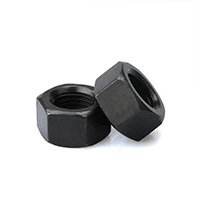
4. Carbon Steel
Carbon steel, while often overlooked for high-temperature applications, can be treated to enhance its properties, making it a viable option for many industrial applications.
- Cost-Effective: Carbon steel is generally more affordable compared to other high-performance materials.
- Heat Treatment: When heat-treated, it can achieve reasonable strength and durability at elevated temperatures.
- Applications: Often found in pipelines, structural components, and machinery parts.
5. Ceramics
Ceramic materials are increasingly being used in high-temperature applications due to their excellent heat resistance and insulating properties.
- Temperature Resistance: Ceramics can withstand temperatures exceeding 3000°F (1649°C).
- Chemical Stability: They are highly resistant to corrosion and wear.
- Applications: Suitable for use in specialized industries like aerospace and electronics.
Application of High Temperature Fasteners in Various Industries
High-temperature fasteners find widespread use across multiple industries:
- Aerospace: Utilized in jet engines, airframes, and exhaust systems where performance and weight savings are critical.
- Automotive: Used in engines, exhaust systems, and other components that operate at high temperatures.
- Oil and Gas: Essential for piping systems and refining equipment that encounter extreme conditions.
- Power Generation: Employed in turbines and reactors where high temperatures are standard.
FAQs About High Temperature Fasteners
1. What are high-temperature fasteners?
High-temperature fasteners are specially designed components that hold together parts in applications exposed to extreme heat without losing their integrity.
2. Why is material selection crucial for high-temperature fasteners?
Material selection is vital because it affects the fastener's performance, durability, and ability to withstand harsh environments and thermal conditions.
3. What are the common applications of high-temperature fasteners?
They are used in various sectors, including aerospace, automotive, oil and gas, and power generation.
4. Can carbon steel be used for high-temperature fasteners?
Yes, carbon steel can be used when properly heat-treated to enhance its performance at elevated temperatures.
5. What are the benefits of using titanium alloys for fasteners?
Titanium alloys offer a high strength-to-weight ratio, excellent corrosion resistance, and can withstand significant temperatures, making them ideal for demanding applications.
Conclusion
Choosing the right material for high-temperature fasteners is essential for ensuring safety, efficiency, and durability in industrial applications. From Inconel alloys with their exceptional thermal properties to cost-effective options like carbon steel, each material has its unique advantages and features. Understanding the characteristics of these materials allows industries to make informed decisions, optimizing performance in high-temperature environments. As technology and materials science continue to progress, the future of high-temperature fasteners holds even more promise, paving the way for safer and more efficient industrial applications.
Hot Tags:
Contact
E-mail:
Phone:
Address:
Yongnian Southwest Development Zone, Handan City, Hebei Province


PRODUCT SEARCH
Search And Quickly Find The Products You Need
The company has a modern production workshop and a professional technical team. It has introduced advanced automated production equipment from home and abroad, strictly controls every production link, is customer-centric, and is committed to providing customers with high-quality products and services.
Continue Search OR Customize Products