




Understanding Expansion Bolts: Essential Fasteners for Industrial Applications
Jan 17,2025
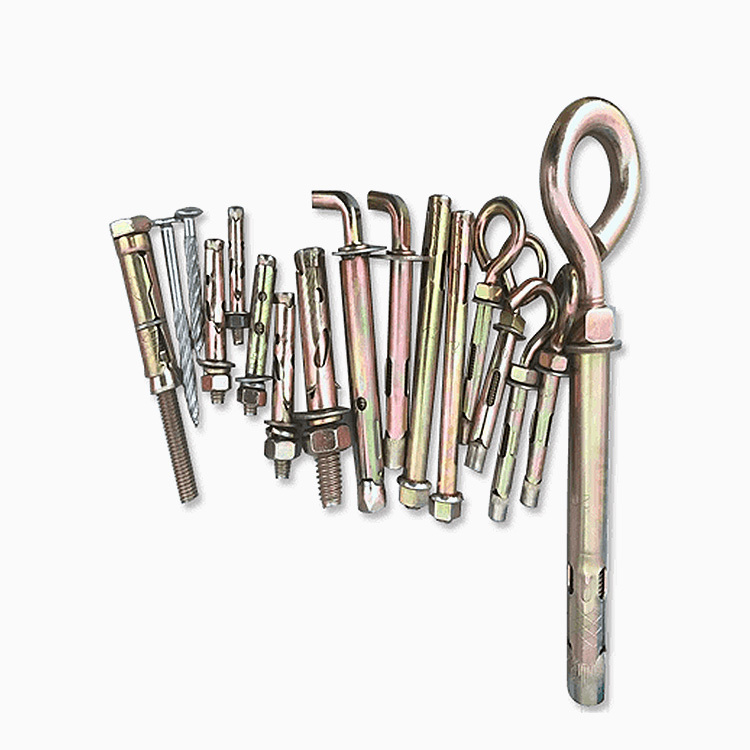
Expansion bolts are a type of fastener that play a crucial role in securing components to concrete or masonry surfaces. They are widely used in various industrial applications due to their ability to provide strong and reliable connections. This article delves into the essential aspects of expansion bolts, including their types, applications, and installation techniques, to help professionals make informed decisions when selecting and using these critical fasteners.
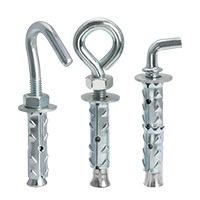
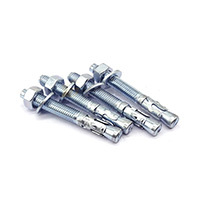
There are several types of expansion bolts, with the most common being wedge anchors, sleeve anchors, and drop-in anchors. Each type is designed for specific applications and materials, making it important to choose the right one based on the project requirements. Wedge anchors, for example, are ideal for heavy-duty applications requiring a strong hold in solid concrete. Sleeve anchors, on the other hand, are versatile and can be used in both solid concrete and masonry materials. Drop-in anchors are often utilized for applications where a flush finish is desired, such as in suspended ceilings or when securing fixtures.
The applications of expansion bolts are vast and varied. They are commonly used in the construction industry for securing structural elements like beams and columns, as well as in the installation of machinery, shelving, and other heavy equipment. Their ability to provide a reliable connection in challenging environments makes them a preferred choice for both permanent and temporary installations.
Installing expansion bolts requires careful attention to detail to ensure optimal performance. The installation process typically involves drilling a hole in the base material, inserting the expansion bolt, and then tightening it to secure the connection. It is essential to follow the manufacturer's guidelines for hole size, depth, and torque specifications to avoid potential failures.
When selecting expansion bolts, professionals should consider factors such as load requirements, environmental conditions, and the materials being used. Corrosion-resistant coatings may be necessary in environments exposed to moisture or chemicals, while specific anchor lengths and diameters should match the intended application.
In conclusion, expansion bolts are indispensable components in industrial fastening applications. Understanding their types, applications, and proper installation techniques is vital for ensuring the safety and stability of structures. By making informed choices regarding these fasteners and adhering to best practices, professionals can achieve optimal results in their projects while enhancing the overall integrity of their constructions.
There are several types of expansion bolts, with the most common being wedge anchors, sleeve anchors, and drop-in anchors. Each type is designed for specific applications and materials, making it important to choose the right one based on the project requirements. Wedge anchors, for example, are ideal for heavy-duty applications requiring a strong hold in solid concrete. Sleeve anchors, on the other hand, are versatile and can be used in both solid concrete and masonry materials. Drop-in anchors are often utilized for applications where a flush finish is desired, such as in suspended ceilings or when securing fixtures.
The applications of expansion bolts are vast and varied. They are commonly used in the construction industry for securing structural elements like beams and columns, as well as in the installation of machinery, shelving, and other heavy equipment. Their ability to provide a reliable connection in challenging environments makes them a preferred choice for both permanent and temporary installations.
Installing expansion bolts requires careful attention to detail to ensure optimal performance. The installation process typically involves drilling a hole in the base material, inserting the expansion bolt, and then tightening it to secure the connection. It is essential to follow the manufacturer's guidelines for hole size, depth, and torque specifications to avoid potential failures.
When selecting expansion bolts, professionals should consider factors such as load requirements, environmental conditions, and the materials being used. Corrosion-resistant coatings may be necessary in environments exposed to moisture or chemicals, while specific anchor lengths and diameters should match the intended application.
In conclusion, expansion bolts are indispensable components in industrial fastening applications. Understanding their types, applications, and proper installation techniques is vital for ensuring the safety and stability of structures. By making informed choices regarding these fasteners and adhering to best practices, professionals can achieve optimal results in their projects while enhancing the overall integrity of their constructions.
Hot Tags:
PREVIOUS:

Contact
E-mail:
Phone:
Address:
Yongnian Southwest Development Zone, Handan City, Hebei Province


PRODUCT SEARCH
Search And Quickly Find The Products You Need
The company has a modern production workshop and a professional technical team. It has introduced advanced automated production equipment from home and abroad, strictly controls every production link, is customer-centric, and is committed to providing customers with high-quality products and services.
Continue Search OR Customize Products